
Grinder Pumps
Grinder pump systems are used in many neighborhoods where site conditions (such as building elevations and ground slopes) make construction of a conventional “Gravity Sewer System” impractical. A grinder pump works like a household garbage disposal, but on a larger scale: it grinds up wastewater produced in your home (i.e. toilet use, shower, washing machine, etc.) and pumps it into the public sewer system. Grinder pump systems have usage considerations that must be followed for the system to function properly. If the guidelines below are routinely followed, the system will typically require very few repairs and maintenance. However, malfunctions are possible. Any irregularity in the system can trigger a red light and audible alarm to go off on the system’s control panel indicating service may be needed.
Kelly Crossroads Grinder Pump Procedure
Upon customer calling for grinder pit alarm going off Kelly Township Municipal Authority will assist customers as follows:
KTMA will assist with the 1st pump out of the pit to verify the pump is not working and installing a “spare” pump so customer can continue using facilities. This 1st service must occur between the normal operating hours Monday-Friday 7:00AM-3:30PM at no charge thereafter at 1 time per day at a rate of $60.00/Hour
KTMA will only assist in basic electrical diagnostics to verify pump condition before removing old pump and will not replace other electrical components. However, KTMA may have various components available for sale on a first-come first served basis.
If the problem occurs Monday-Friday between 3:30PM-7:00AM, Friday 3:30PM until Monday 7:00AM, or Holidays, KTMA will still provide service but is limited to pumping the pit 1 time a day at a rate of $60.00/Hour and then assist in a spare pump installation between normal operating hours Monday-Friday 7:00AM-3:30PM.
In the event of a pump failure Kelly Township Municipal Authority will offer new pumps available for purchase and installation. If the customer would like to take their failed pump to be inspected for repair, it will be 100% the homeowner’s responsibility. However, this must be completed in a timely manner (est. 4 week) so KTMA can receive their “spare pump” back to assist others in need.
System Components
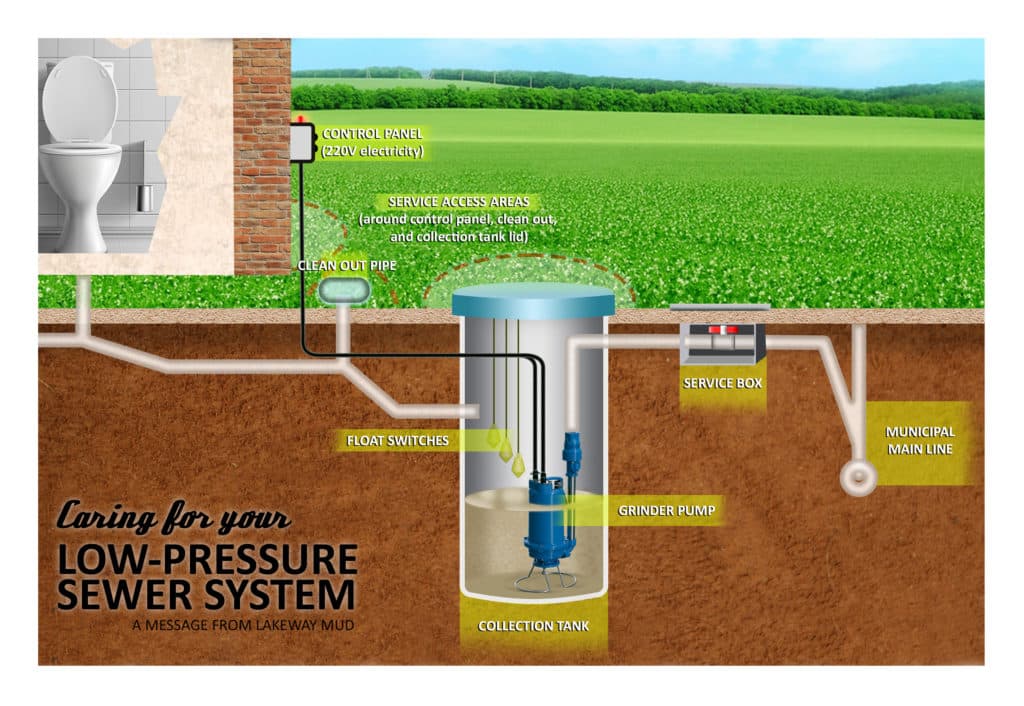
Grinder pumps are typically buried underground with the collection tank lid, a clean out pipe access area, and the corresponding control panel above ground. The illustration shows Service Access Areas that must remain unobstructed at all times.
Care & Operation
What to Expect
Normally functioning grinder pump systems do make some sounds when they turn on, but it should not be disruptive. They also emit minimal, if any, odor. Customers should notice only a slight increase to their electric bill since the grinder pump should only be running a few times a day.
Power Outages / Heavy Rain
A grinder pump system control panel is operated by electricity so power outages affect the ability for the system to function. Customers should limit water disposal down pipes during power outages.
Alert That Repairs Are Needed
If a grinder pump system needs maintenance, an audible and/or lighted alarm on the control panel will alert Customers that service is needed. If the alarm does not turn off within about five (5) minutes of discontinued water use, repairs may be necessary.
During Extended Leave
Prior to vacating a property for extended periods of time, warranting more than three (3) months of disuse of the grinder pump system, Customers should run water down a drain until the pump turns on; this will help to flush out the pump and prevent odors. Do not turn off the pump during extended absences. Pumps need to be run at least once every three (3) months to continue functioning properly.
Routine Maintenance
Maintenance or repairs on any wastewater system often result from flushing inappropriate materials down the toilet, pouring inappropriate materials down a drain, or placing inappropriate waste down the disposal causing blockages. They can also result from situations beyond the Customers’ control, such as excess storm water entering the system, freezing temperatures, or regular wear and tear on system components. Learning the appropriate way to dispose of household waste protects the sewer system, keeps costs down, and protects the environment.
What NOT to Flush Down the Toilet, Pour Down a Drain, or Put Down the Disposal
- Fats, Oils, and Grease (including cooking or lubricating oils, and greasy foods)
- Diapers
- Tampons, Applicators, Sanitary Napkins
- Wet wipes of any kind (even those claiming to be “flushable”)
- Dental floss
- Hair and Fingernail clippings
- Cotton Swabs, Q-tips, Cotton balls
- Kitty litter and Aquarium gravel
- Rubber or Latex items (such as contraceptive devices)
- Cigarette butts
- Syringes
- Candy/Food wrappers
- Disposable toilet brushes
- Paper towels and Facial tissues (toilet paper only)
- Metal, Glass, and Plastic
- Eggshells and Coffee grounds
- Flammable or Hazardous materials
- Strong chemicals and Paint thinners
- Seafood shells
- Any pharmaceutical products (pills and other medications)
- Rags, Cloths, Towels, Socks, Underwear
Garbage Disposals: General advice is do not OVERUSE a garbage disposal. The majority of what is put in a garbage disposal can (and should) be put into the trash. This will keep the cost of operation and maintenance lower and will prevent early pump failure.
BOTTOM LINE: Only flush the 3 Ps (pee, poo, and toilet paper) and keep FOG (fats, oils, grease) out of wastewater drains! The items listed above, as well as any other non-dissolvable or abrasive items, should be collected and placed in a trash can or other container for disposal with your household garbage or as otherwise indicated on the product’s label. Medications can be properly disposed of using a community-based “Take-Back Initiative” program. Hazardous waste can be dropped off at designated disposal locations.